Typically covered
- Liability for injuries you cause to others
- Property damage to other people’s vehicles or property
- UM/UIM (uninsured/underinsured motorist) — sometimes available
- MedPay — where offered
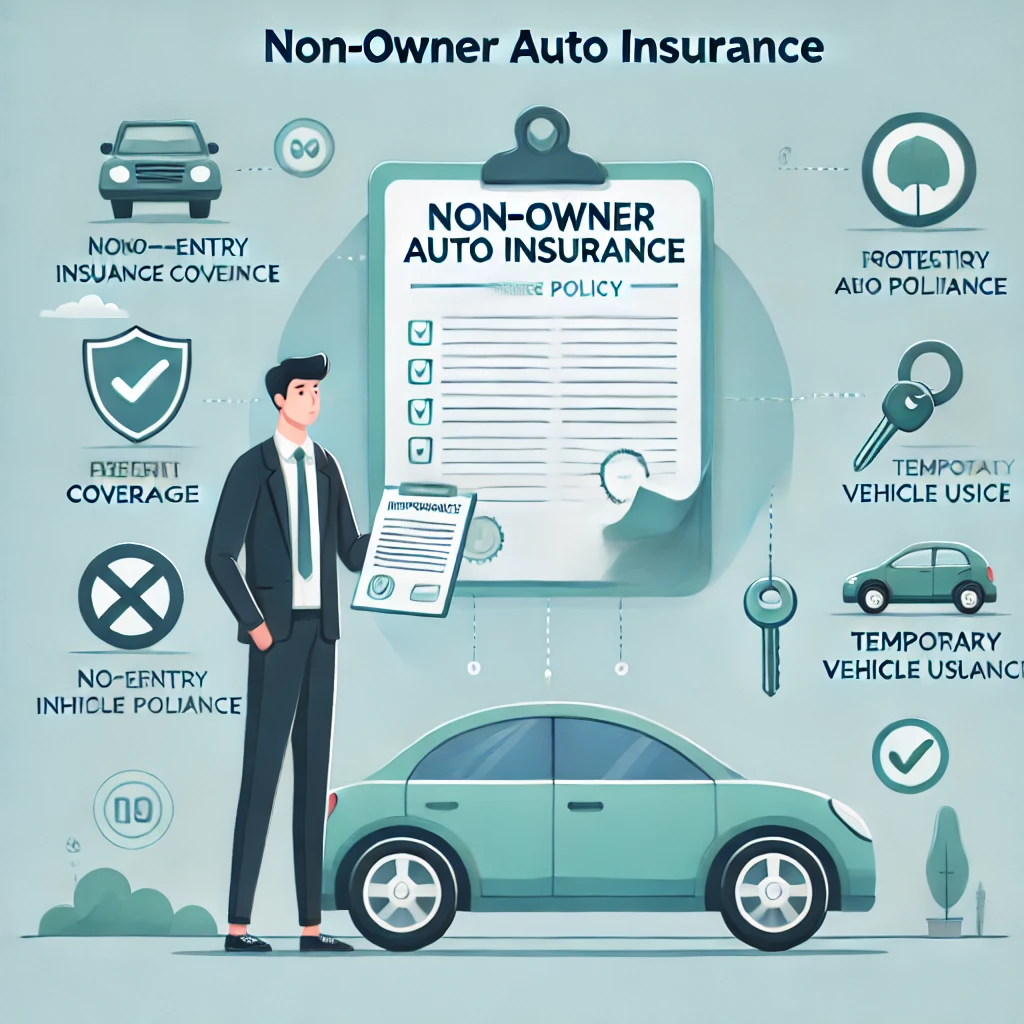
Non-owner auto insurance is a liability-only policy for drivers who don’t own a car. It helps protect you when you borrow or rent vehicles and can support SR-22 filings.
If you drive but don’t own a vehicle—think occasional rentals, car-share trips, or borrowing a friend’s car—non-owner car insurance can keep you legally protected. It’s typically a liability-only policy in your name, designed for licensed drivers who don’t have a vehicle titled to them and don’t have regular access to a household car. Many people also use a non-owner policy to avoid a lapse in insurance history or to satisfy a state financial responsibility requirement when an SR-22 (or FR-44, where applicable) is required.
A non-owner policy is built for drivers who are licensed but do not own a vehicle and do not have a vehicle available for regular use. It generally follows you as the driver and provides liability protection when you operate a non-owned private passenger vehicle with permission. In practical terms, it helps you:
Good to know: A non-owner policy is not the same as being “listed” on someone else’s policy. It’s your own insurance, issued in your name.
Coverage varies by insurer and state. In many situations, the vehicle owner’s policy responds first; a non-owner policy may act as excess/secondary liability depending on policy language.
If you regularly use a specific vehicle, live with the owner, or keep a car at your address—even if you’re not on the title—non-owner is often not the right fit. In that case, you should usually be listed on the household policy or set up a standard policy structure for the vehicle.
If a state requires proof of financial responsibility after a violation or lapse, we can often add an SR-22 (or FR-44, where applicable) to a non-owner policy. The insurer files the form with the state to show you carry the required liability limits. This can be a practical solution when you need to keep a license valid but don’t currently own a car.
The key is consistency: keep the policy active for the entire required filing period to avoid restarting the requirement or triggering new penalties.
Rentals: A non-owner policy may provide liability, but it usually does not cover damage to the rental car itself. Consider the rental company’s CDW or a credit card benefit for physical damage.
Car share: Platforms often include some liability coverage. Limits and deductibles vary. A non-owner policy can provide consistency and extra liability protection depending on policy terms.
Household vehicles: Most non-owner policies exclude vehicles kept at your residence or available for regular use. If you frequently drive a household car, being listed on that policy is usually the correct solution.
Summary only. Availability and terms vary by state and insurer; your policy forms govern.
| Scenario | What applies | Primary/secondary | What’s missing | Action |
|---|---|---|---|---|
| Borrow a friend’s car occasionally | Non-owner liability protects you for covered liability events | Owner policy usually primary; non-owner may be excess | No damage coverage for the friend’s car | Choose strong limits; verify owner’s limits |
| Frequent rentals | Liability in your name while driving rentals (terms vary) | Rental agreement and owner coverage vary; your policy may apply as excess | No physical damage to the rental under non-owner | Use CDW/credit card benefit for car damage |
| Car share platform | Platform coverage + your non-owner (depends on policy language) | Platform often primary; non-owner may be excess | Deductibles and platform gaps may remain | Confirm platform limits; keep non-owner for consistency |
| Need SR-22 / no car owned | Non-owner policy with required filing | Not applicable | N/A | Request SR-22/FR-44 on quote |
| Drive a roommate’s car regularly | Non-owner likely excludes household/regular-use vehicle | Roommate’s policy should list you | Non-owner won’t replace being listed | Get added to household policy |
We can explain which policy responds first and how non-owner limits coordinate with other coverage.
No. It generally covers your liability to others, not physical damage to the vehicle you borrow or rent. Consider CDW for rentals.
Typically no. Most non-owner policies exclude business use like rideshare or delivery unless specifically endorsed. Ask about commercial coverage.
Yes. If you need SR-22 or FR-44, we can often attach it to a non-owner policy so you can meet requirements without owning a car.
Select limits that align with your assets and risk tolerance. Many drivers choose higher-than-minimum limits to protect savings and future wages.
Yes. When you buy a car, we can transition you to a regular policy and preserve your continuous coverage history.
Independent agency: Blake Insurance Group LLC is an independent insurance agency and is not affiliated with any single carrier.
Licensing: Licensed insurance producer (NPN 16944666).
Important: Features, availability, exclusions, filings, and pricing vary by state and insurer and are subject to underwriting and policy terms. This page is informational and not a contract.




