
Home Insurance Options (2026): Compare Dwelling, Personal Property, Liability, Deductibles, Add-ons, and Quotes
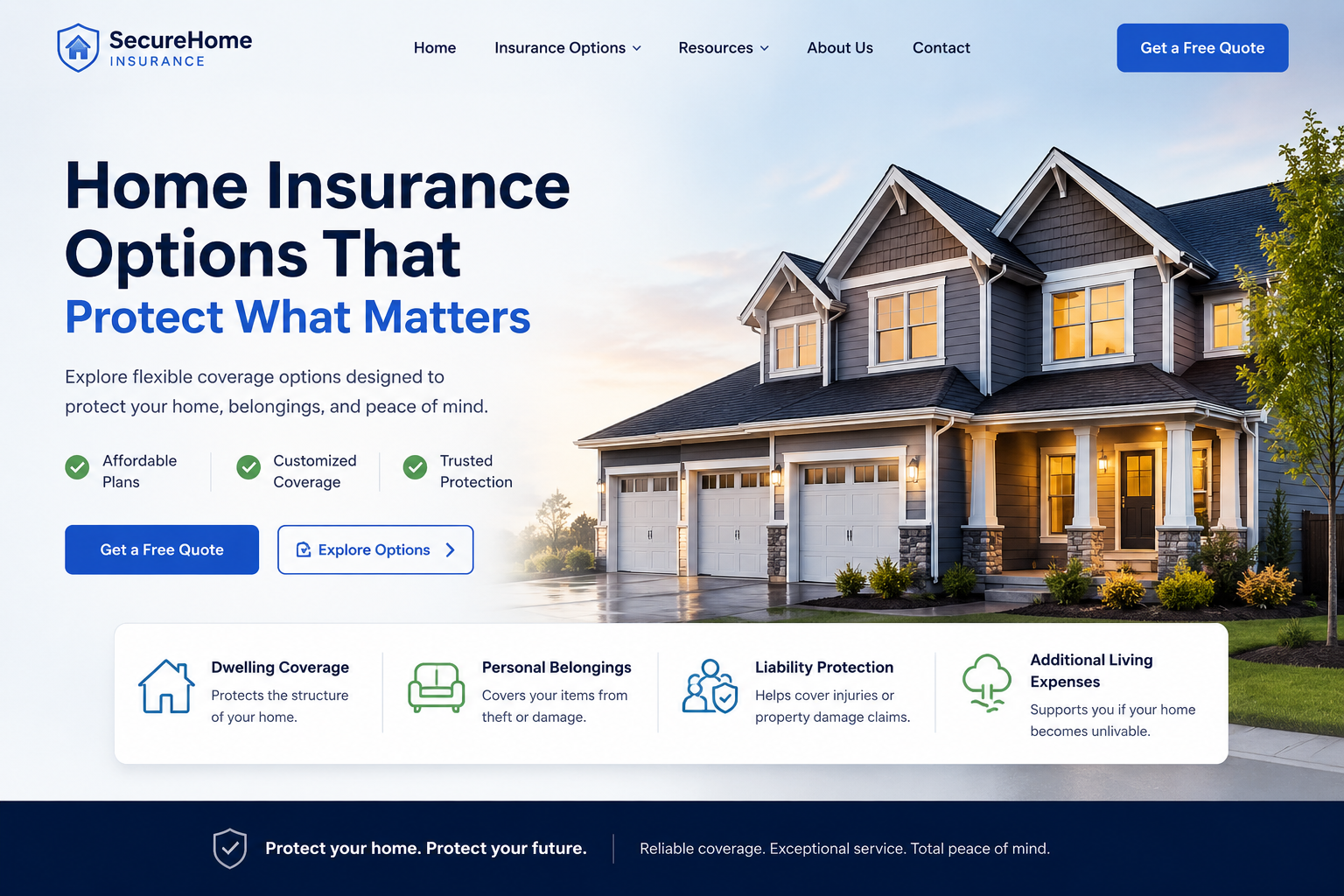
Choosing home insurance options in 2026 is not just about meeting a mortgage requirement. The right policy should protect the structure, belongings, liability exposure, temporary living expenses, and the real risks around your home. A standard homeowners policy can be a strong foundation, but the details matter: dwelling limit, roof settlement, water backup, jewelry limits, ordinance or law, service line, equipment breakdown, deductible choices, and whether you need separate flood or earthquake coverage.
Homeowners insurance is usually built as a package policy. It commonly includes dwelling coverage, other structures, personal property, loss of use, personal liability, and medical payments to others. Standard policies generally do not cover every loss. Flood, earthquake, routine wear and tear, neglect, maintenance issues, pest damage, and certain high-value property limits often require separate policies, endorsements, or scheduled coverage. The best home insurance option is the one that fits the home you actually own, not just the premium you prefer.
How to compare home insurance options the right way
A good home insurance comparison starts with the rebuild cost, not the market value. Market value includes land, location, and buyer demand. Dwelling coverage should focus on what it may cost to repair or rebuild the home after a covered loss, including materials, labor, debris removal, code upgrades, and local construction conditions. From there, compare personal property limits, liability protection, deductible choices, and add-ons that address the gaps in a standard policy.
- Start with the dwelling limit: review replacement cost, roof age, construction type, square footage, and local rebuild costs.
- Check other structures: detached garages, sheds, fences, pools, workshops, and casitas may need more than the default limit.
- Review personal property: furniture, clothing, tools, electronics, jewelry, collectibles, and home office equipment may need inventory review.
- Choose deductibles carefully: wind/hail, hurricane, named storm, water, or all-peril deductibles can change the claim outcome.
- Add missing protections: water backup, service line, equipment breakdown, scheduled property, flood, and earthquake may need separate attention.
Quick facts: home insurance options in 2026
Use this quick table before comparing carriers. It gives you a clean baseline for what a home policy usually does, what it does not do, and where endorsements may be needed.
| Question | Practical answer | Why it matters |
|---|---|---|
| Does home insurance cover the house? | Yes, dwelling coverage helps repair or rebuild the home after covered losses. | The dwelling limit should reflect realistic rebuild cost. |
| Does it cover belongings? | Yes, personal property coverage applies to covered losses, subject to limits and exclusions. | Jewelry, art, tools, firearms, collectibles, and business property may need extra coverage. |
| Does it include liability? | Most homeowners policies include personal liability and medical payments to others. | Higher liability limits and umbrella insurance can protect assets and income. |
| Does it cover flood? | Standard homeowners insurance generally does not cover flood damage. | Flood insurance usually requires a separate policy or private flood option. |
| Does it cover earthquake? | Standard homeowners insurance generally does not cover earthquake damage. | Earthquake protection usually requires a separate policy or endorsement where available. |
Home insurance coverage options: what each part of the policy does
Every home insurance option should be reviewed as part of one overall protection plan. A policy with a strong dwelling limit but weak personal property settlement may still create problems. A policy with a low deductible but missing water backup coverage can leave a major claim gap. Use this table to compare the core pieces.
| Coverage | What it helps protect | What to verify | Smart move |
|---|---|---|---|
| Dwelling | The main home and attached structures after covered losses | Replacement cost estimate, roof settlement, code upgrades, exclusions | Review the limit annually and after renovations |
| Other structures | Detached garage, shed, fence, guest house, workshop, or similar structures | Default percentage, scheduled limits, and structure eligibility | Increase the limit if detached structures are valuable |
| Personal property | Furniture, clothing, electronics, appliances, tools, and belongings | Replacement cost vs actual cash value and special limits | Create a home inventory and schedule high-value items |
| Loss of use | Additional living expenses if a covered loss makes the home unlivable | Limit, time period, covered expenses, and claim triggers | Check whether the limit fits local rental and hotel costs |
| Personal liability | Covered bodily injury or property damage claims made by others | Limit, exclusions, pets, pools, rentals, and business exposures | Consider higher limits or umbrella coverage |
| Medical payments | Small medical expenses for guests injured on the property, regardless of fault | Limit options and eligible claim situations | Use as a supporting coverage, not a replacement for liability protection |
Home insurance add-ons and endorsements worth comparing
Endorsements can make a standard policy fit your home better. Some are inexpensive but valuable. Others matter only when the exposure is real. The goal is to add the coverages that close meaningful gaps without paying for features you do not need.
| Add-on | What it may cover | Best for | What to verify |
|---|---|---|---|
| Water backup | Backup through sewers, drains, or sump systems when covered | Homes with basements, sump pumps, or sewer backup exposure | Limit, deductible, excluded water sources |
| Service line | Underground utility lines serving the home when eligible | Older homes and properties with buried service lines | Covered lines, excavation costs, exclusions |
| Equipment breakdown | Sudden mechanical or electrical breakdown of covered home systems | Homes with newer appliances, HVAC, smart systems, or expensive equipment | Covered equipment, deductible, age limits |
| Ordinance or law | Extra cost to rebuild to current building codes after a covered loss | Older homes or areas with strict code requirements | Limit percentage and eligible code upgrades |
| Scheduled personal property | Higher protection for jewelry, watches, art, collectibles, and valuables | Households with items above standard special limits | Appraisals, deductibles, mysterious disappearance, itemized schedules |
| Identity fraud / cyber | Selected identity theft, fraud, or cyber recovery expenses | Households using online banking, smart devices, or remote work tools | Covered events, reimbursement limits, response services |
| Flood insurance | Covered flood damage through a separate NFIP or private flood policy | Homes near water, drainage issues, high-risk zones, or lender requirements | Building limit, contents, waiting period, lender acceptance |
| Earthquake coverage | Earthquake-related damage through a separate policy or endorsement where available | Homes in seismic areas or with masonry, older construction, or higher risk | Percentage deductible, masonry exclusions, contents and loss-of-use limits |
Deductibles: the home insurance option that changes your claim-day cost
Deductibles deserve more attention than many homeowners give them. A higher deductible can reduce premium, but it also shifts more cost to you when a claim happens. Some policies use separate deductibles for wind, hail, hurricane, named storm, water, or earthquake. A percentage deductible can be much larger than a flat dollar deductible because it is based on the insured value of the home.
| Deductible type | How it works | What to watch | Smart move |
|---|---|---|---|
| Flat deductible | A set dollar amount such as $1,000, $2,500, or $5,000 | Lower premium may come with a higher claim-time cost | Choose an amount you can pay without delaying repairs |
| Wind / hail deductible | A separate deductible for wind or hail losses | Can be flat or percentage-based depending on the policy | Review if roof or storm claims are a major local risk |
| Named storm / hurricane deductible | Applies to certain storm-related losses in eligible areas | Trigger language matters and can vary by state and policy | Compare the dollar impact before buying |
| Percentage deductible | Calculated as a percentage of the insured dwelling limit | A 2% deductible on a high-value home can be a large out-of-pocket cost | Convert the percentage into real dollars before choosing |
| Special endorsement deductible | May apply to water backup, service line, equipment breakdown, or earthquake | Each add-on may have separate terms | Review endorsement deductibles one by one |
Home insurance quote help by region and property type
Home insurance options vary by state, ZIP code, weather exposure, roof age, wildfire risk, distance to fire protection, claim history, and replacement cost. Blake Insurance Group helps homeowners compare home insurance options across multiple licensed states, with a focus on practical coverage fit instead of one-size-fits-all pricing.
| Area / property type | Examples | Common quote focus |
|---|---|---|
| Primary homes | Single-family homes, townhomes, owner-occupied properties | Dwelling replacement cost, liability, deductibles, roof settlement |
| Condos and townhomes | Condo units, attached homes, HOA-governed properties | Walls-in coverage, loss assessment, master policy coordination |
| Rental and landlord properties | Single-family rentals, duplexes, short-term rental review | Dwelling fire, liability, loss of rents, tenant requirements |
| High-weather-risk areas | Wind, hail, wildfire, monsoon, hurricane, or winter storm regions | Deductibles, roof age, mitigation, exclusions, replacement cost |
| Homes needing specialty review | Older homes, high-value homes, vacant homes, manufactured homes | Carrier eligibility, inspection issues, specialty endorsements, coverage gaps |
Get home insurance quotes online
Start your home insurance quote with the online quote path below. For the cleanest comparison, use accurate information about roof age, square footage, construction type, updates, prior claims, current policy, mortgagee details, protective devices, and desired coverage. The strongest home insurance option is the one that gives you the best combination of price, coverage, deductible comfort, claims support, and policy fit.
Have your address, roof age, home updates, square footage, current policy, mortgagee details, and desired deductible ready before starting.
Related topics
Home insurance options FAQs (2026)
What are the main home insurance coverage options?
The main coverage options usually include dwelling, other structures, personal property, loss of use, personal liability, and medical payments to others. Many homeowners also compare endorsements such as water backup, service line, equipment breakdown, scheduled property, flood, and earthquake coverage.
Does homeowners insurance cover flood damage?
Standard homeowners insurance generally does not cover flood damage. Homeowners who want flood protection typically need a separate flood policy through NFIP or a private flood insurance option.
Does homeowners insurance cover earthquake damage?
Standard homeowners insurance generally does not cover earthquake damage. Earthquake coverage usually requires a separate policy or endorsement where available, often with a percentage deductible.
How much dwelling coverage should I choose?
Dwelling coverage should be based on estimated rebuild cost, not market value. Review square footage, construction type, roof age, local labor costs, materials, debris removal, and code upgrades.
What home insurance add-ons are most important?
The most important add-ons depend on your home. Water backup, service line, equipment breakdown, ordinance or law, scheduled valuables, flood insurance, and earthquake coverage are common options to review.
Independent agency: Blake Insurance Group LLC is an independent insurance agency and is not affiliated with any single homeowners insurance company.
Licensing: Licensed insurance producer (NPN 16944666).
Important: Home insurance availability, premiums, discounts, policy forms, underwriting decisions, coverage options, limits, deductibles, exclusions, inspections, and claims handling vary by insurer, state, ZIP code, property condition, roof age, claim history, and policy design.
Separate coverage note: Flood, earthquake, maintenance, wear and tear, pests, and certain high-value items are not automatically covered by a standard homeowners policy. Review separate policies and endorsements where needed.
Trademarks: All product and company names are trademarks™ or registered® trademarks of their respective holders. Use of them does not imply affiliation or endorsement.





Reviews are loaded from Google when you click “View reviews.”